

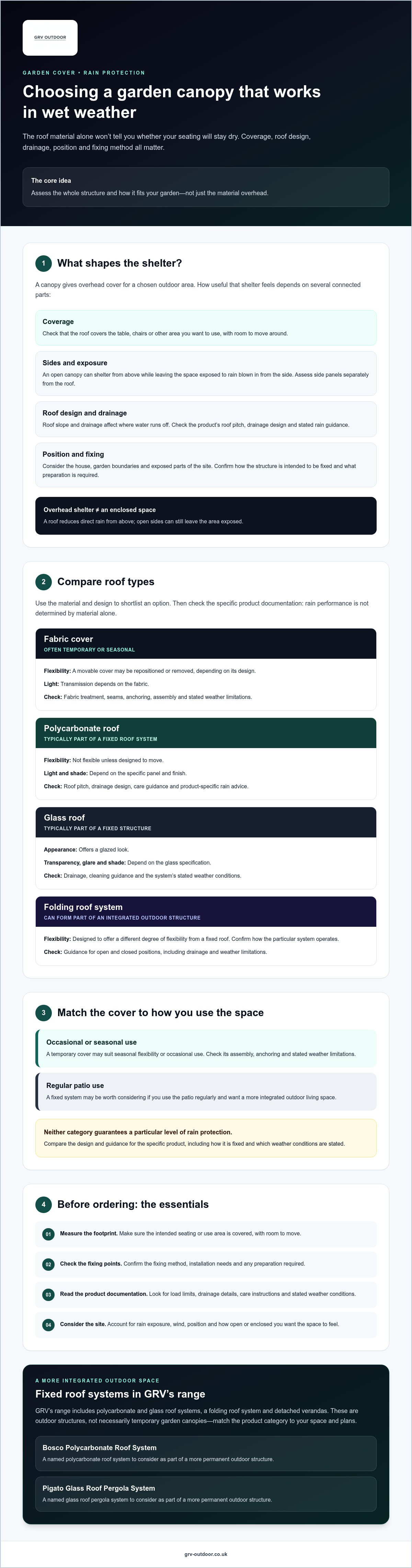
The roof material alone won’t tell you whether a garden canopy will keep your seating dry. A garden canopy for rain protection depends on the whole structure: its coverage, roof design, drainage, position and fixing method.
It’s easy to focus on appearance or choose the quickest cover, only to find it doesn’t suit your garden or how you want to use the space. Rain exposure, wind and installation requirements all matter, particularly when comparing a temporary canopy with a more permanent outdoor structure.
This guide compares common cover options by their rain protection, everyday usability and installation needs. You’ll see what to consider with fabric covers, awnings and pergola-style structures, alongside fixed roof systems such as polycarbonate and glass. We’ll also cover what to check before ordering, including measurements, drainage, fixing points and product guidance. Use these points to find a cover that suits your garden, home and plans for outdoor living.
Key Takeaways
- Compare fabric, polycarbonate, glass and folding roofs by permanence, light transmission and flexibility before choosing a cover.
- Choose a garden canopy for rain protection that suits your garden layout, fixing options and how often you plan to use the space.
- Assess side walls separately from the roof, as they affect how enclosed the area feels and how exposed it remains.
- Before ordering, check measurements, fixing points and product documentation for load limits, installation needs and stated weather conditions.
- For a more integrated outdoor space, explore fixed roof options such as GRV’s Bosco Polycarbonate Roof System and Pigato Glass Roof Pergola System.
What does a garden canopy for rain protection need to do?
A garden canopy for rain protection is an overhead cover intended to reduce direct exposure to rain over a chosen outdoor area. But the word “canopy” doesn’t tell you how well a particular structure will suit your space. Coverage, roof design, drainage and site exposure all affect the shelter it provides.
Consider both where rain comes from and where it will go. A roof may cover a dining area from above, while open sides leave it exposed to rain blown in by the wind. The structure’s position relative to the house, garden boundaries and exposed parts of the site can all affect how useful that shelter feels.
How much rain shelter does a garden canopy provide?
Start with the footprint. Check that the roof covers the table, chairs or other area you want to use, with enough room to move around. Then consider the sides. An open canopy can provide overhead shelter without stopping rain reaching the space from the side. Side panels change the enclosure and exposure, so assess them separately from the roof.
Overhead shelter reduces direct rain from above, while an enclosed space also limits exposure from the sides. Roof slope and drainage affect where water runs off, but these details vary by system. Check the product documentation for roof pitch, drainage design and stated rain guidance instead of assuming every cover handles water in the same way. An awning or overhang is another form of overhead cover, with its own design and fixing considerations.
Temporary cover or permanent outdoor structure?
Portable canopies and fixed roof systems suit different routines. A temporary cover may suit seasonal flexibility or occasional use. A fixed system may be worth considering if you use the patio regularly and want a more integrated outdoor living space. Neither category guarantees a particular level of rain protection, so check the product’s design and guidance.
Materials, fixings and assembly requirements vary between products. Compare the documentation for the specific system rather than assuming one type is more durable or easier to install. Confirm how it is intended to be fixed, what preparation is required and whether its stated weather conditions suit your plans.
To narrow your options, decide how often you’ll use the area, whether you need to move or remove the cover, and how closely you want the structure to connect with your home. GRV’s range includes polycarbonate and glass roof systems, a folding roof system and detached verandas. These are outdoor structures, not necessarily temporary garden canopies, so match the product category to the space and use you have in mind.
Compare garden canopy roof materials and designs for wet weather
Roof material affects the look and feel of a garden cover, but it doesn’t determine rain performance on its own. Use this comparison to shortlist a design, then check the manufacturer’s documentation for care instructions, drainage details and stated weather conditions.
| Roof type | Permanence | Light and flexibility | Rain-management checks |
|---|---|---|---|
| Fabric cover | Often chosen for temporary or seasonal use; fixing and assembly vary. | Light transmission depends on the fabric. A movable cover may be repositioned or removed, depending on its design. | Check fabric treatment, seams, anchoring and stated weather limitations. |
| Polycarbonate roof | Typically considered as part of a fixed roof system. | Light transmission and shade depend on the specific panel and finish; the roof isn’t flexible unless designed to move. | Review roof pitch, drainage design, care guidance and product-specific rain advice. |
| Glass roof | Typically part of a fixed structure. | Offers a glazed appearance, but transparency, glare and shade depend on the glass specification. | Check drainage, cleaning guidance and the system’s stated weather conditions. |
| Folding roof system | Can form part of a more integrated outdoor structure. | Designed to offer a different degree of flexibility from a fixed roof. Confirm how the particular system operates. | Check guidance for both open and closed positions, including drainage and weather limitations. |
Fabric and temporary canopy covers
A fabric cover can suit occasional or seasonal shelter when flexibility matters. Don’t assume it is waterproof from the material name alone. Check how the fabric is treated, how the seams are constructed and what conditions the manufacturer advises against. Review anchoring and assembly requirements as well. A movable cover may work differently day to day from a fixed roof, particularly if you need it to remain in place for regular use.
Polycarbonate, glass and folding roof systems
Solid polycarbonate and glass roofs create fixed overhead coverings, while a folding design adds a movable element. The material alone won’t tell you how much light reaches the patio, how much shade it provides or how water drains. GRV’s confirmed categories include the Bosco Polycarbonate Roof System, Pigato Glass Roof Pergola System and Verdeca Folding Roof. Compare the product-specific information on transparency, cleaning and drainage before deciding.
Material alone cannot establish whether a garden canopy is suitable. Assess the complete system, its fixings, drainage design, exposure and stated weather guidance. For fixed structures in England, check the relevant householder planning guidance alongside any local requirements. To compare confirmed options, explore GRV’s outdoor roof systems.
Which garden canopy is the better fit for your space and use?
Start with the space, not the product category. Measure the area you want to cover, note whether the structure could attach to the house or needs to stand independently, and consider how often you’ll use it. A seating area beside a suitable wall presents different options from an exposed patio where you prefer an open, freestanding layout.
Decide how open you want the space to feel, too. A roof can provide overhead cover, but open sides leave the area exposed to wind-driven rain. Side panels may change that exposure and make the space feel more enclosed, so assess them separately from the roof. Check that the structure, fixings and drainage suit the proposed position. No single garden canopy for rain protection will suit every garden.
| Option | Potential advantages | Points to weigh |
|---|---|---|
| Flexible, temporary cover | May suit occasional shelter and a need to move or store the cover. | Check assembly, anchoring, storage and stated weather limits. |
| Fixed roof structure | May suit regular patio use and a more integrated connection with the home. | Requires careful checks of dimensions, fixing points, drainage and installation arrangements. |
When a simple canopy may be enough
If you need cover for short periods or seasonal use, a movable canopy may fit better than a permanent structure, provided you follow its stated limits. Consider where you’ll store it, how it is assembled and anchored, and whether you need to relocate or remove it. GRV’s confirmed range centres on outdoor structures and roof systems, including folding roofs and verandas, rather than fabric canopy products.
When a fixed veranda or roof system may suit better
For regular patio use, a fixed roof may create a more integrated transition between home and garden. GRV’s polycarbonate and glass roof systems, along with its detached veranda category, are options to investigate. Their suitability depends on your property and the specific product, not simply its material or category.
Before choosing, check the planned dimensions and whether the design attaches to a wall or stands independently. Review the product’s drainage guidance, fixing requirements and stated weather conditions. Confirm the assembly and installation arrangements for that specific system, too. These checks help you decide whether a permanent structure fits your home, intended use and available space.
What to check before buying a garden canopy for rain protection
Before ordering, check that the structure fits your garden and that its fixing, drainage and intended use are clear. A garden canopy for rain protection needs to suit the actual site, not just the space shown in a product image. Use this checklist to identify questions to resolve before committing.
Measure the garden and plan rainwater run-off
Measure the proposed footprint, height and clearance around doors, windows, paths and boundaries. Then map where rainwater will drain. A roof’s discharge point could affect a doorway, seating area or another part of the garden, so check the proposed position carefully. Ask for the chosen system’s dimensions, roof pitch and drainage details rather than trying to judge them from its material or appearance.
Check exposure, installation and project requirements
Consider how exposed the location is to wind and ask for product-specific guidance on suitable conditions. Don’t assume a cover is appropriate for your garden simply because it is marketed for outdoor use. Confirm the required fixing points and review the documentation for load limits, assembly or installation needs, and stated weather conditions.
Pre-purchase checklist:
- Measure the area. Record the footprint, height and clearance around openings, paths and boundaries.
- Identify fixing points. Note whether the structure is intended to attach to the home or stand independently, and check that the proposed fixing location is suitable.
- Assess exposure. Consider how open the site is to wind and seek guidance for the specific product and position.
- Plan drainage. Confirm roof pitch and where water will run off, then check that the route works for your garden.
- Match the cover to your use. Decide whether you need occasional, movable shelter or a structure for regular outdoor use.
- Review the documentation. Check load limits, stated weather conditions, care requirements and assembly or installation arrangements. Confirm who is responsible for each part of the process.
- Check project requirements. Planning and building requirements can depend on the property, structure and location. Consult current official guidance and your relevant local authority before proceeding.
For a more integrated outdoor space, compare fixed roof options with the measurements and conditions at your property. GRV’s confirmed categories include polycarbonate and glass roof systems, a folding roof system and a detached veranda. Explore GRV’s outdoor roof systems and check the documentation for the particular option you’re considering.
Explore GRV roof systems for a more permanent garden rain cover
If you’re looking beyond temporary shelter, GRV’s outdoor structures include polycarbonate and glass roof systems, a folding roof and a detached veranda. These are distinct categories, not interchangeable versions of a standard garden canopy. Use your garden layout, preferred roof style and intended use to decide which options are worth investigating. The category is a starting point, not evidence of how a specific system will perform in rain.
Match the GRV roof category to your priorities
Consider a polycarbonate roof system if you’re comparing solid-roof options. GRV’s Bosco Polycarbonate Roof System is in this category. For a glazed design, investigate the Pigato Glass Roof Pergola System. The roof material and product name alone don’t confirm light transmission, drainage or weather suitability, so check the product-specific details.
The Verdeca Folding Roof may be worth considering if a folding design suits how you want to use the space. The Ribolla Detached Veranda is a separate option to explore if a freestanding structure better fits your garden than one connected to the house. Confirm the form, dimensions and requirements for each system before comparing them with your site.
Turn your shortlist into a confident purchase
Before ordering, make sure you understand what the specific product includes and how it relates to your plans. Check the product listing and supporting documentation for:
- Exact dimensions and the components included.
- Roof pitch, drainage design and product-specific guidance for rain and other stated weather conditions.
- Fixing points, load limits and any preparation required at the proposed location.
- Assembly or installation requirements, and who is responsible for arranging them.
- Delivery arrangements for the particular product.
If any detail is missing or unclear, ask GRV to clarify it before committing to an order. That helps you judge whether a system suits your home and intended use instead of relying on assumptions based on its material or category. Confirming rain guidance is especially important if your main aim is a garden canopy for rain protection.
Browse GRV’s outdoor roof systems to compare the confirmed categories, then review the product-specific information for the option that best fits your garden.
Choose a cover that works with your garden
The right garden canopy for rain protection depends on more than roof material. Match the cover to your garden’s layout, how often you’ll use the space and whether you need flexible shelter or a more integrated structure. Then check the practical details: dimensions, fixings, drainage, exposure and product-specific weather guidance.
GRV designs and manufactures outdoor structures, with confirmed categories including polycarbonate and glass roof systems, folding roofs and detached verandas. These options offer different forms to consider, but the details of each system matter. Review its specifications and resolve any unanswered questions before ordering.
Ready to explore fixed roof options for your outdoor space? Explore GRV’s outdoor roof systems and compare the categories with your plans. Check the product details against your garden and intended use before choosing.
Frequently Asked Questions
Is a garden canopy fully waterproof?
Not necessarily. A garden canopy for rain protection may reduce direct rainfall, but its performance depends on the specific cover, roof construction, seams, pitch, drainage and site exposure. Even a roof that sheds water may not keep every area dry, particularly when wind drives rain in from the sides. Check the manufacturer’s product documentation for stated weather conditions and limitations before relying on it for shelter.
Can a garden canopy protect a patio from wind-driven rain?
An overhead canopy can reduce direct rainfall, but open sides may leave the patio exposed to rain carried by wind. The amount of shelter depends on the structure’s orientation, site exposure and whether compatible side panels are available for that system. Review the product’s intended use and ask the supplier about the specific installation. Don’t assume a roof alone will keep the whole patio dry in exposed conditions.
Which roof material is best for a garden canopy in the UK?
There’s no universally best roof material. Polycarbonate and glass systems offer different design and light characteristics, while a folding roof adds a movable element, depending on the product. Consider the look you prefer, how much light you want and the care the system requires. Rain performance depends on the complete design and installation, not material alone. Compare information on roof construction, pitch, drainage and stated weather conditions before choosing.
Do I need planning permission for a garden canopy in the UK?
It depends on the structure, property, location and project details, so a general answer can’t confirm the requirements for every buyer. Before proceeding, check current official planning guidance and contact the relevant planning authority if you’re unsure how it applies to your property. Consider building requirements separately where relevant, and don’t assume a rule that applies in one part of the UK applies across the whole country.
How do I stop rainwater pooling on a garden canopy?
Check the exact product’s roof design, pitch, drainage route and installation instructions before use. Pooling may indicate that the structure isn’t draining as intended, but the cause and appropriate response depend on the system and installation. Don’t alter the roof or drainage in a way that falls outside the manufacturer’s guidance. If pooling persists or the run-off route is unclear, ask the supplier or an appropriately qualified professional to assess it.
Are glass or polycarbonate roofs better for rain protection?
Neither is automatically better. Both are roof-system categories, and rain performance depends on the complete product design, including joints, pitch, drainage, fixings, exposure and installation. Compare those details with the manufacturer’s guidance for each system. Then consider light transmission, appearance and cleaning as separate priorities. A material name alone isn’t a weather guarantee, so check the technical information for the particular glass or polycarbonate roof you’re considering.
Can I install a garden canopy myself?
Possibly, but installation requirements vary by product, structure and site. Read the current instructions before ordering, check the fixing requirements and be realistic about your ability to assemble the system safely. Confirm who is responsible for assembly or installation and whether additional professional support is needed. Don’t assume installation is included with a product purchase. If the structure or property requirements are unclear, seek appropriate project-specific advice first.