

Can a veranda keep your patio comfortable when rain arrives on the wind? A weatherproof veranda UK homeowners choose should be judged by the shelter it provides, not by a promise of an all-weather room. An open-sided roof can help protect the space below from overhead rain, but wind-driven showers can still reach the patio.
If you’re weighing up glass against polycarbonate, or a fixed roof against an adjustable design, focus on how each option suits your property, the patio’s exposure and the way you want to use the space. Shelter and a fully enclosed room are not the same thing.
This guide explains what a veranda can realistically protect you from, which design details to consider and how to approach upkeep. It also compares how roof materials affect light and outlook, and how fixed and folding options differ. GRV’s range includes glass and polycarbonate roof systems, alongside the Verdeca Folding Roof, giving you options to compare with your outdoor space.
Key Takeaways
- Think of a weatherproof veranda UK as a way to reduce exposure, not seal an outdoor space against every shower or gust.
- Assess your patio’s conditions. Roof pitch, gutters and clear drainage routes all affect how rain is managed.
- Compare glass, polycarbonate and folding roofs by the light, outlook and adjustability you want, as well as the shelter your space needs.
- Start with how you’ll use the patio, then consider dimensions, position, sun exposure and water run-off.
- Compare GRV’s Bosco Polycarbonate Roof System, Pigato Glass Roof Pergola System and Verdeca Folding Roof against your priorities.
What does a weatherproof veranda in the UK actually protect you from?
A veranda can make a patio more usable, but “weatherproof” doesn’t mean sealed against every kind of weather. Its roof provides cover from above, while open sides leave the space exposed. When assessing a weatherproof veranda UK homeowners are considering, look at where it offers shelter and where rain or wind can still reach.
A weatherproof veranda is a covered outdoor structure that reduces exposure to rain and sun, but doesn’t guarantee protection from wind-driven rain, cold air or every weather condition. A roof can intercept falling rain, but wind may carry showers beneath it from the side. Comfort depends on the roof design, the veranda’s orientation, the site’s exposure and whether any sides are enclosed.
What weather can a veranda help shield you from?
The most direct benefit is overhead shelter. A roof can help keep rain off the area beneath it and provide shade from direct sun, making the patio more comfortable for a meal or time outdoors. The amount of shade and light depends on the roof and its position. Consider how the space feels at different times of day.
Open sides are the main limitation. Wind can carry rain onto furniture and the patio, while cooler air can move freely through the space. A veranda may give you more opportunities to use your garden, but it can’t promise year-round comfort. The UK’s climate varies by location and season, as outlined in the Climate of the United Kingdom. Base your choice on the conditions at your property rather than assuming one design will feel the same everywhere.
Is a veranda the same as a weatherproof garden room?
No. A roofed, open-sided veranda remains connected to the outdoors. It provides cover without creating a sealed indoor environment. A garden room, by contrast, uses doors and walls or panels to enclose more of the space. That changes how much wind and rain can enter, as well as how air moves through the area.
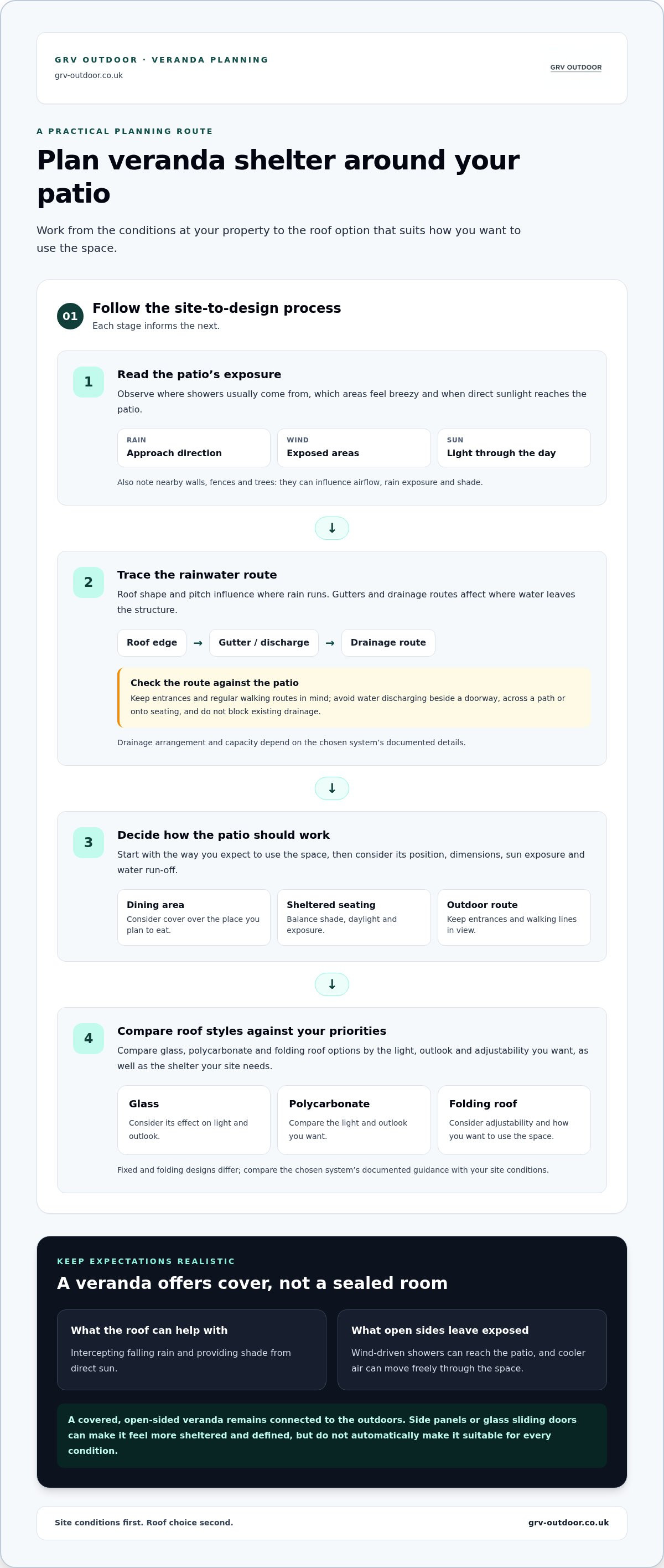
Side panels or glass sliding doors can make a covered space feel more sheltered and defined, while shaping its outlook and airflow. They don’t automatically make it suitable for every condition. If you’re considering a more enclosed layout, compare how it would change the space: how much protection you want, how open you want the patio to feel and how you expect to use it.
Start with the level of shelter you need. If overhead cover is the priority, an open veranda may fit. If you want a more enclosed transition between indoors and outdoors, consider how doors or side elements would affect the space before choosing a roof system.
How UK weather affects veranda design, drainage and comfort
There’s no single set of conditions to design around. A sheltered patio beside the house may experience rain and wind differently from an exposed garden, and seasonal changes affect how much sun or shade the space gets. Start by observing your property: where showers usually come from, which areas feel breezy and when direct sunlight reaches the patio.
These details help you assess a weatherproof veranda UK homeowners can use more comfortably, without assuming a roof will perform identically in every setting. Nearby walls, fences and trees can influence airflow and how rain reaches the covered area. They may provide some shelter, but can also create shade or affect the space around the structure. Consider the whole site, not just the roof material.
Why rainwater run-off matters for a veranda
Roof shape and pitch influence the direction rainwater runs. Gutters and drainage routes affect where it leaves the structure. If water discharges beside a doorway, across a path or onto seating, the covered area may be less practical even when the roof is doing its job. Consider how the veranda’s planned position relates to existing drains and the surrounding ground.
Before settling on a layout, trace the likely route from the roof edge to the drain. Keep entrances and regular walking routes in mind, and avoid blocking existing drainage. The drainage arrangement and capacity depend on the chosen system and its documented details, so don’t assume all roofs manage water in the same way.
How wind and seasonal changes affect an outdoor shelter
An open-sided veranda remains exposed to gusts and wind-driven rain. The direction the structure faces can affect which side is most exposed, while nearby walls or other features may alter airflow. Sun direction matters too: a patio that feels bright and welcoming at one time of year may be shaded at another. Decide whether your priority is daylight, shade or a balance across the seasons.
Use this site checklist before comparing designs:
- Rain: Where does water usually approach from, and where could roof run-off go?
- Wind: Which parts of the patio feel exposed, and do nearby features change the airflow?
- Sun: When does direct sunlight reach the area, and where would shade be useful?
- Use: Will the space mainly serve as a dining area, a sheltered seating spot or a route between indoors and outdoors?
- System suitability: Compare site conditions with the chosen system’s documented guidance rather than assuming one design fits every property.
Keep these factors in view as you compare roof options. Explore GRV veranda systems with your patio’s exposure, drainage route and preferred balance of sun and shelter in mind.
Glass, polycarbonate or folding roof: which veranda suits your weather needs?
Choose a roof by how you want the patio to feel and function, not by assuming one material makes an open-sided veranda weatherproof in every condition. Compare your preferences for outlook, light and flexibility with the site’s exposure. A roof can provide shelter from above, but it can’t stop wind-driven rain entering from open sides.
Use this comparison to identify what to look for in each system’s product details:
| Roof approach | Outlook and light | Privacy | Adjustability and exposure |
|---|---|---|---|
| Fixed glass | Consider it if an open outlook is a priority; check the specific system’s details. | Assess the roof’s transparency and whether you need screening at the sides. | A fixed roof doesn’t open to change overhead cover. Open sides remain exposed. |
| Polycarbonate | Compare the panel details with your preferred level of light. | Check the material’s appearance and transparency against the privacy you want. | A fixed design keeps the roof in place; the sides still affect exposure. |
| Folding roof | Consider how opening or closing the roof could suit changing preferences for sun and cover. | Roof movement doesn’t screen the sides, so assess privacy separately. | Designed to fold, it offers another way to adjust overhead cover. Check the system guidance for use in changing conditions. |
These are decision points, not performance rankings. A transparent roof, for example, may preserve an open outlook, but it won’t provide privacy from neighbouring windows. Side screening is a separate consideration. A folding design lets you change the roof position, but its suitability for particular site conditions depends on the system’s documented details.
When might a glass or polycarbonate roof suit your patio?
Glass may suit a patio where maintaining an open outlook is important. Polycarbonate is another option to assess against your preferred light, privacy and intended use. Compare the specifications for the exact system rather than relying on broad claims about either material. GRV’s range includes the Pigato Glass Roof Pergola System and Bosco Polycarbonate Roof System.
What does a folding roof change?
A fixed roof stays in place, while a folding roof is designed to open and close. This gives you another way to respond to changing preferences for sun or overhead cover. It doesn’t guarantee protection in particular weather, and open sides remain a factor. GRV’s Verdeca Folding Roof is an option to consider. Compare its product information with your patio’s exposure and intended use.
To assess the material trade-offs, compare the product information for the systems you’re considering. For a weatherproof veranda UK homeowners can assess realistically, start with a clear view of your priorities rather than a blanket promise about performance.
How to plan a weatherproof veranda: a practical UK checklist
Plan around the way you’ll use the patio, not a product photograph. A dining area beside the house may need a different footprint and balance of light from a quiet seating space at the end of the garden. A checklist helps you compare your priorities with the actual site, then assess whether a system’s documented details suit both.
- Decide how you’ll use the space. List the main activities, such as dining, relaxing or creating a sheltered route from the house. Decide whether rain cover, shade, an open outlook or more enclosure matters most.
- Measure the intended footprint. Record the available width and depth, then mark doors, windows, paths, steps and existing structures. Consider how people will move through the space and whether the roof could affect access or views.
- Choose the position. Note whether the veranda would attach to the property or stand separately in the garden. Layout and structural suitability depend on the system and property, so compare documented requirements with the site rather than assuming either arrangement will fit.
- Track sun and exposure. Observe when direct sunlight reaches the patio and which sides face the weather most often. Include nearby walls, fences and trees in your assessment, as they can affect shade and airflow.
- Map water run-off. Identify where rainwater could leave the roof and travel across the ground. Check the route against entrances, paths, seating and existing drainage before settling on a position.
- Review the system information. Compare the product’s documented specifications, site suitability and care guidance with your measurements and intended use. Don’t infer performance or upkeep requirements from the material name alone.
What should you measure and assess before choosing?
Measure the intended location and sketch the house, planned roof edge, openings and drainage route. Note changes in ground level and obstacles that could affect the layout. These details give you a more useful basis for comparing veranda options. Structural suitability and installation requirements are specific to the property and system, so use the relevant product information to guide your decision.
How should you set realistic weather expectations?
Decide which benefit matters most. An open roofed structure may suit a priority for overhead rain shelter or shade, while side elements can create a more enclosed feel and change airflow. Neither should be treated as a promise of complete sealing. Follow the manufacturer’s guidance for the particular system, including its care instructions, rather than applying a universal maintenance schedule.
Planning permission is a separate consideration from choosing a roof. Use the relevant UK veranda planning permission guide to research the planning context for your project, and avoid relying on assumptions based on another property or structure.
Once your measurements and priorities are clear, explore GRV veranda systems and compare their documented details with your patio. This makes it easier to shortlist an option for a weatherproof veranda UK project without relying on broad claims.
Explore GRV veranda systems for a more sheltered outdoor space
Once you’ve identified how you want your patio to work, compare GRV’s roof systems against those priorities. Consider the experience you want: a clear outlook, a particular quality of light or the option to adjust the roof. The product name identifies the roof category, but the system details and your site conditions help you judge suitability.
Which GRV roof system could match your priorities?
GRV offers glass, polycarbonate and folding-roof options. The Bosco Polycarbonate Roof System is the polycarbonate choice, the Pigato Glass Roof Pergola System is the glass option, and the Verdeca Folding Roof is the folding-roof system. These are distinct starting points for comparison, not promises of a particular level of weather protection.
- Consider Bosco if you’re comparing a polycarbonate roof with your preferred light, outlook and intended use.
- Consider Pigato if you want to explore a glass roof pergola system, then assess its details against your space.
- Consider Verdeca if you want to compare a folding roof with a fixed roof and value the option of changing the roof position.
Assess each system as a whole. Roof material or movement alone doesn’t determine how a veranda will feel in your garden. The layout, exposure and open sides all matter. A roof choice also won’t turn an open-sided structure into a fully enclosed room.
Where to go next with your veranda plans
Use your site notes and intended use to compare systems. Check the product information for the option you’re considering, and relate its documented details to your patio’s dimensions, position, sun exposure and water run-off. If overhead shelter is your priority, focus on whether the system suits the planned location. If you want adjustable cover, compare the folding-roof details with how you expect to use the space.
Consider the qualities that matter in everyday use. Decide how important an open outlook is, whether you want to change the roof position to manage sunlight, and whether open sides suit the level of shelter you’re seeking. These questions keep the choice specific to your home rather than relying on broad claims about what a veranda can do.
A weatherproof veranda UK project is best approached as a match between a system, a site and realistic expectations. Compare GRV’s product details with your priorities before deciding which direction to take. Browse GRV’s veranda systems to explore roof options for your outdoor space.
Take the next step towards a more usable patio
Before choosing a system, picture an ordinary day in the space. Where would you sit? What would you want to keep dry, and how open would you like the garden to feel? Your answers help turn a weatherproof veranda UK project into a clear brief for your outdoor space.
GRV’s online shop serves customers across the UK, with glass, polycarbonate and folding-roof veranda systems to explore. Use your priorities to narrow the options, then compare each system’s product details with your patio and intended use. A considered choice can create a more inviting transition between home and garden, without expecting an outdoor structure to behave like an indoor room.
Explore GRV’s veranda systems and find a roof style to consider for your space. Browse with your measurements and preferred way of using the patio in mind, and start shaping an outdoor area that better suits everyday life.
Frequently Asked Questions
Is a veranda really weatherproof?
Not in the sense of keeping out every kind of weather. A veranda can provide a useful roofed area, but the level of shelter depends on its design and surroundings. For a weatherproof veranda UK homeowners should consider how the space will be used, including whether wind and rain can reach it from the sides. Treat “weatherproof” as reduced exposure, not a guarantee of an all-weather room.
Can you use a veranda in the rain?
Yes, a roofed veranda can make light rain less disruptive, particularly if you’re sitting beneath the covered part. During a passing shower, you may still need to move cushions or other items away from the open edge if rain is blowing in. Check the ground around your seating too: water may splash or run across the patio even when the roof keeps much of the rain above you.
What is the best veranda roof for UK weather?
There isn’t one roof type that’s best for every patio. Glass, polycarbonate and folding roofs suit different preferences for outlook, light and adjustability. The product details explain how each system is designed to be used. Decide what matters most in your space, then compare the relevant information. GRV’s range includes the Bosco Polycarbonate Roof System, Pigato Glass Roof Pergola System and Verdeca Folding Roof.
Does a veranda protect against wind?
A roof alone doesn’t block wind moving across an open patio. Gusts can also carry rain beneath the roof, so a veranda may feel less sheltered on a breezy day than during calm rain. Notice whether the space feels exposed from one particular side and consider how you’ll position outdoor furniture. If you’re assessing side elements, review the product details and how they affect the openness of the area.
How do you stop rainwater collecting on a veranda roof?
Choose a system designed with roof drainage in mind, and keep its gutters and water routes clear in line with the manufacturer’s care guidance. Don’t alter the roof or drainage components based on a general tip: the correct arrangement depends on the specific system. If you notice standing water, leaks or a change in how rain runs off, refer to the product guidance for appropriate next steps rather than assuming the cause.
Do I need planning permission for a veranda in the UK?
Possibly. Don’t assume a veranda falls under the same permitted development rules as a house extension. The answer can depend on the structure, the property and its setting, and local restrictions may apply. Before committing to a design or starting work, review current guidance and speak to your local planning authority about your specific proposal. This is especially important if the property has a special designation or planning restrictions.
How do I maintain a weatherproof veranda?
Follow the care instructions for the exact roof and frame materials rather than applying one cleaning routine to every veranda. Keep an eye on gutters and visible drainage routes, and remove debris that could obstruct water flow. After cleaning, check that doors or moving roof parts, if included in your system, operate as described in the product guidance. Avoid abrasive cleaners or tools unless the manufacturer says they’re suitable.
Can a veranda be enclosed to offer more shelter?
Yes, adding side elements or doors can make the space feel more enclosed and alter how air moves through it. GRV offers options including Polycarbonate Side Walls and Fiano Glass Sliding Doors. Compare the relevant product details with your intended layout. Enclosure can increase shelter, but don’t assume it makes the space completely sealed or suitable for every weather condition.