

The most striking carport isn’t always the right one for your drive. A carport with glass roof can create a clean, contemporary look, but appearance is only one part of the decision. Your vehicle, available space and everyday access matter just as much.
If you’re weighing glass against polycarbonate, or wondering whether a design that looks ideal online will work at home, start by comparing the roof material, dimensions and configuration. These choices shape the look of the structure and how well it fits your vehicle and outdoor space.
This guide explains how to compare the practical trade-offs, what to measure and how to assess the carport’s position alongside your property. It also covers why product images alone can’t tell you whether a design is a good fit. Once you’ve worked through those decisions, GRV’s Pinella Carport is one option to include in your shortlist.
Key Takeaways
- Compare glass and polycarbonate by the look, light and upkeep you want from your carport.
- Assess how a carport with glass roof will suit your vehicle, property and everyday routine.
- Measure the parking area and approach, allowing room for vehicle access and doors to open comfortably.
- Separate essential clearances from optional needs, such as a pedestrian route or extra storage.
- Use your priorities to guide your shortlist, then explore GRV’s Pinella Carport as an option.
What a Carport with Glass Roof Offers for Your Vehicle and Home
A carport with glass roof is a covered parking shelter with glazing overhead, supported by a frame and usually open at the sides. It marks out a parking space without enclosing the vehicle behind walls and a door. For a general introduction to carports and their variations, see What is a Carport?
This open format keeps the vehicle accessible, while the roof provides overhead cover. It can make parking feel connected to the drive or garden rather than contained in a separate building. The trade-off is that the sides remain exposed. A carport isn’t a fully enclosed vehicle space and won’t separate the vehicle from its surroundings in the same way as a garage.
How a glass-roof carport differs from a garage
Consider your daily routine. An open-sided shelter may suit a household that wants to pull in and out easily, without opening and closing a garage door each time. The open sides can also make the structure feel less enclosed. However, if you need a space that closes around the vehicle or separates it from outdoor conditions on all sides, a carport may not meet that need on its own.
Think about where the parking area will sit, too. A shelter beside the house can provide a convenient route between car and home, while a detached structure may fit more naturally elsewhere on the plot. The right position depends on access, your property layout and how open you want the space to feel. Don’t judge suitability by the roof alone.
Why consider glass overhead?
Glazing gives a roof a distinct visual character. Its transparent appearance can complement contemporary architecture and make the structure feel less like a solid canopy. The effect depends on the frame, roof shape and proportions, as well as the house and its surroundings. Assess the whole structure, not just the roof surface.
Transparency also affects the view and daylight beneath the structure. A glazed roof can keep more of the sky and surrounding light visible than an opaque covering. The result varies with the glazing and site conditions, so treat this as a design consideration rather than a guaranteed level of brightness.
Separate appearance from the practical brief. First decide what the shelter needs to do for your vehicle and how you’ll use the surrounding space. Then consider whether glass suits the look you want and the sense of light you’d like overhead. An attractive roof doesn’t determine whether the carport works for your parking routine. A good choice balances vehicle cover, access and how the structure fits into your outdoor space.
Glass Roof Carport Design: Glazing, Frame and Everyday Use
Start with the site, not the product image. Consider how the roof, supporting frame and vehicle will fit together, then look at the details. A sleek carport with glass roof can complement a modern exterior, but proportions and access determine whether it works in everyday use.
What to consider about the glass roof
Decide how transparent you want the overhead surface to appear and how much daylight you want beneath it. Glazing can make a roof feel visually lighter than an opaque covering, but the effect also depends on the frame and roof shape. Compare the complete structure with the house, nearby windows and other outdoor features.
“Glass” alone isn’t a complete technical specification. The glazing type, construction and suitability for overhead use all matter. Before choosing a system, review its product documentation for details about the glazing and its intended application. Don’t infer safety claims from a photograph or a general product description.
Roof shape also affects the overall impression. A shallow, clean-lined profile may feel understated, while a more pronounced shape can create a stronger architectural feature. Check how the roof edges relate to the building and whether the proportions look balanced from the approach as well as from inside the property.
How frame design and access shape usability
Frame placement affects how you use the space. Posts that appear discreet in a product image could obstruct a vehicle door or narrow a walking route at home. Picture the car parked in position, then allow room to open the doors, get in and out, and carry items past the vehicle. These movements help define the useful footprint, not just the roof area.
Consider your approach, too. If you need to turn into the parking space at an angle, you may need more room at the entrance than for a straight drive-in. Think through where the vehicle’s front and rear will sit, and whether there’s enough space to manoeuvre without making access awkward. A layout that fits the car on paper may feel tight in practice.
Choose a frame appearance that relates to the home’s lines and existing materials. The aim isn’t necessarily to match every detail, but to create a coherent result. For a broader project check, the Planning Portal’s UK Carport Planning Permission and Building Regulations link is a starting point. Planning and building regulations are separate considerations, so look for guidance relevant to your proposal.
Once you’ve considered glazing, proportions and access, explore GRV’s carport options with your site and vehicle requirements in mind.
Glass vs Polycarbonate Carport Roofs: Which Suits Your Priorities?
There’s no universal winner between glass and polycarbonate. The right roof depends on the appearance you want, the way the material is specified and how you’ll use the sheltered space. Compare the actual products side by side rather than assuming one material always performs better or suits every project.
| Priority | Glass | Polycarbonate |
|---|---|---|
| Appearance | Can create a glazed, refined look. The finished effect depends on the glass specification and frame. | Offers a different visual character. Appearance varies with the product and its specification. |
| Daylight | Transparency and tint influence how the roof looks and how much light passes through. | Transparency, colour and design also affect the light beneath it. |
| Care | Check the product’s cleaning guidance and consider how visible marks may be from below. | Follow the care instructions for the specific material and finish. |
| Project priorities | May appeal if a glazed architectural appearance is central to your brief. | Worth comparing if you’re open to an alternative roof material and appearance. |
When a glass roof may better match your priorities
Consider glass if you want a clearly glazed roof that relates visually to other glass features or contemporary lines on the property. Its transparency may help preserve a sense of openness overhead, although the result depends on the glazing and conditions around the carport. Review product-specific information for details such as glazing type and intended use. Don’t judge technical suitability by appearance alone.
When polycarbonate may be worth comparing
Polycarbonate is an alternative, not an automatic step up or down. Compare the products themselves: look at how each roof appears, what the material information says and whether the overall design fits your priorities. If you’re weighing options for a wider outdoor roof project, the best veranda roof material comparison offers additional context.
For either material, check claims against information for the specific system. Review product documentation for glazing or panel details, cleaning guidance and suitability for the intended application. Avoid relying on broad claims about lifespan, insulation, impact resistance or weather performance unless they’re supported by product-specific information. Two roofs made from the same broad material can differ in specification and appearance.
Bring the comparison back to your priorities. If the visual character of a carport with glass roof matters most, assess the glazing alongside the frame and setting. If you’re considering polycarbonate, judge its particular finish and specification on their own terms. The better choice is the one that meets your requirements as a complete system, not simply the one with the more appealing material name.
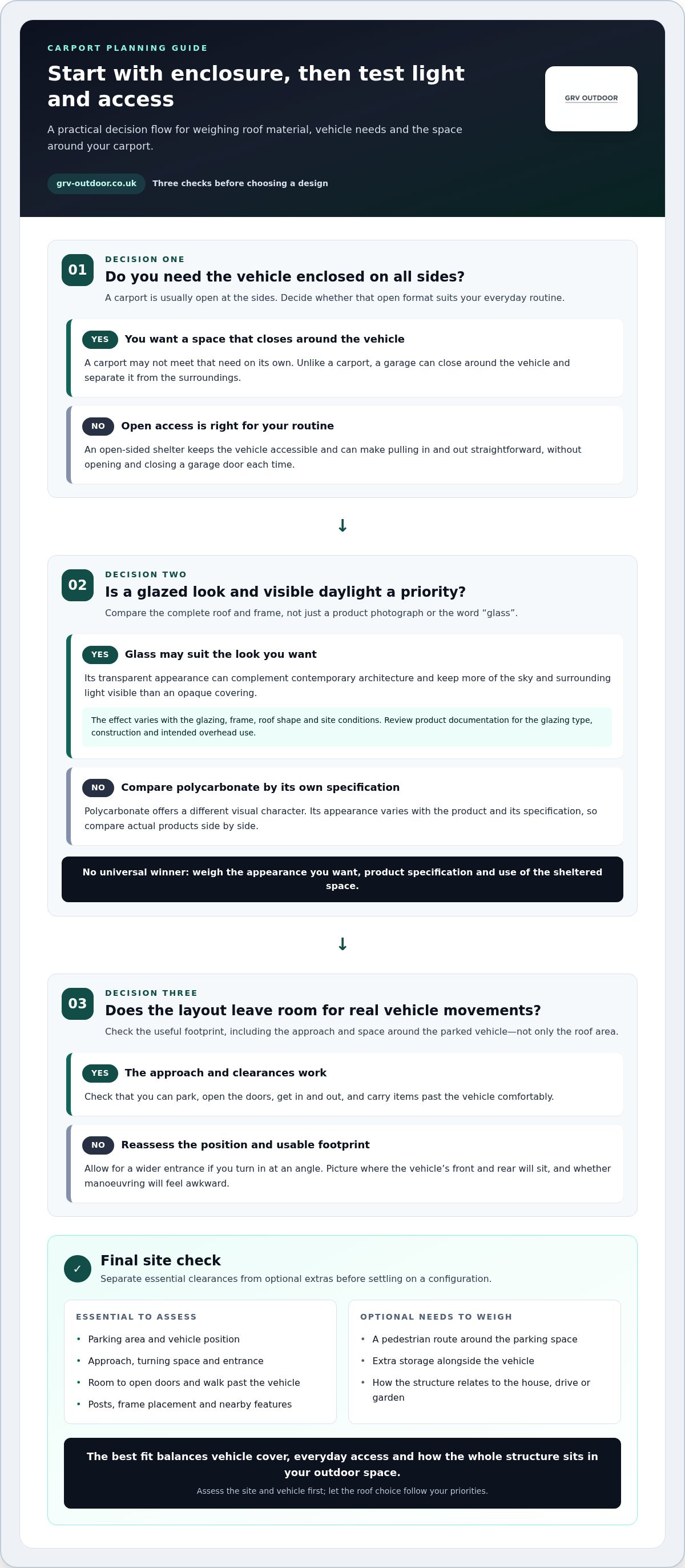
How to Assess Your Space Before Choosing a Glass-Roof Carport
Measure the space as you use it, not just as an empty rectangle. The carport footprint needs to accommodate the vehicle, its approach and the movements you make around it. Work through this check before comparing designs. It helps separate essential fit from optional extras such as storage or a separate walking route.
Measure for the vehicle, doors and approach
Start with the vehicle you use most often. Record its length and width, then consider how far the doors open and how much room you need to get in, get out and unload. If you may change vehicles, factor that in rather than measuring for a tight fit today.
- Measure the parking area. Note the usable width and depth, including parts narrowed by walls, fences, planting or existing structures.
- Map the vehicle’s movement. Check the approach angle and the space needed to turn, reverse or straighten up. A space that fits a parked car may still be awkward to enter.
- Allow for everyday access. Mark where the doors open and where you’ll walk around the vehicle. Treat these clearances as essential. Add storage and a dedicated pedestrian route only if the site allows.
- Record obstacles and boundaries. Include gates, windows, drains, roof overhangs and changes in level. These can affect where the posts and roof can sit.
- Compare the measured space with the design. Use the overall dimensions and post positions, not roof area alone, to judge whether the carport will function as intended.
Check placement, ground and permissions
Once you have a workable footprint, consider the proposed position and the ground beneath it. Note whether the surface is level, paved or otherwise surfaced, and how rainwater from the roof could be managed. These observations help you assess the site alongside the structure’s requirements, without assuming one foundation or drainage arrangement suits every property.
Planning and building requirements depend on the project, the property and the rules that apply in its location. Check current UK guidance and seek project-specific information before deciding where or how to build. The UK veranda planning permission guide offers related context, but a carport proposal may need its own assessment.
Keep a simple site note with measurements, obstacles, ground details and your preferred access route. This makes it easier to compare a carport with glass roof against the space you actually have, rather than relying on a product image. With your requirements clear, explore GRV’s Pinella Carport as one option to consider.
Choosing a GRV Carport with Glass Roof: From Priorities to Next Steps
You’ve considered the choices that shape a carport: vehicle fit, access, site conditions and roof material. Bring those decisions together before browsing. A clear shortlist helps you compare options against how you’ll actually use the space, rather than choosing by appearance alone.
Match the carport to your shortlist
Start with your non-negotiables. Check that the overall footprint suits the parking area, the vehicle can enter and leave comfortably, and doors can open without clashing with posts or nearby obstacles. Then consider preferences, such as a pedestrian route or space for occasional storage. Separating essential clearances from nice-to-haves makes trade-offs easier to spot.
Next, compare the roof material and appearance with the needs you identified. Look at specific product details, not just a broad label such as glass or polycarbonate. Confirm that the dimensions and configuration work with your measurements, and review the product information for details relevant to your intended use. If you want more shelter beyond the vehicle, weatherproof veranda guidance can offer wider context on creating a sheltered outdoor area.
Make a short comparison note before settling on a design. Record the usable width and depth, access requirements, site constraints and roof qualities you prioritise. This gives you a consistent basis for weighing up options and helps prevent a striking image from overshadowing practical fit.
Explore the GRV Pinella Carport
GRV’s Pinella Carport is one carport option to include in your shortlist. Use its product information to assess it against the space and vehicle requirements you’ve already defined. Keep the evaluation specific: do the stated dimensions and configuration suit your site, and does the design align with your priorities? A product name or image alone can’t answer those questions.
If your preferred roof material is central to the decision, compare product details with the material requirements you’ve established instead of assuming a specification from appearance. This keeps your choice grounded in the information provided for the product and in how the structure needs to work at your property.
Your next step can be simple. With measurements and priorities in hand, browse GRV’s outdoor structures range and consider the Pinella Carport alongside your requirements. A considered shortlist makes it easier to move from inspiration to a choice that fits your vehicle and outdoor space.
Turn Your Carport Plans into a Confident Choice
Turn your shortlist into a clear brief. Note what the structure needs to accommodate, how you’ll use the space and which design details matter most. That gives you a practical reference as you compare options and keeps visual appeal connected to everyday function.
A carport with glass roof should feel considered within its setting, not chosen on looks alone. Explore the Pinella Carport alongside GRV’s modular outdoor structures, and use the product information to guide your decision. GRV’s online UK store lets you browse the range at your own pace.
Explore GRV’s outdoor structures and the Pinella Carport, then take the next step towards a design that suits your vehicle and outdoor space.
Frequently Asked Questions
Is a carport with a glass roof suitable for everyday vehicle parking?
It can suit everyday parking if the selected system fits your vehicle, site and routine. Consider how often you’ll use the space and whether you need room to unload shopping, child seats or equipment. Check the product’s stated dimensions and intended use, then decide whether an open-sided layout meets your needs. The roof material alone can’t determine whether a particular carport is suitable.
Can a glass-roof carport be freestanding?
Some glass-roof carport systems are designed to stand independently, while others use a different support arrangement. Don’t assume every model can be installed in either format. Review the manufacturer’s configuration information and compare it with the intended position on your property. For example, a narrow space beside a boundary may affect which layout is practical. The structure must suit the site as well as the vehicle.
Does a glass carport roof need regular cleaning?
Glass may show leaves, dirt and water marks, so occasional cleaning can help maintain its appearance. How often it needs cleaning depends on exposure and nearby features such as trees. Follow the care guidance for the exact glazing and frame. Don’t assume every household glass cleaner, cloth or tool is suitable for an overhead roof. Use the methods recommended for that system.
Does a glass roof protect a car from hail?
Don’t assume a glass-roof carport offers a particular level of hail protection. Performance depends on the glazing specification and the structure as a whole, and products can differ. Check the technical documentation for the specific system for any stated impact performance. A general term such as “toughened” isn’t a substitute for a clear, product-specific performance claim. If hail protection is a priority, include it in your requirements.
Can I add side panels to a carport with a glass roof?
Side panels can be added when they’re designed to work with the carport’s structure. GRV offers Polycarbonate Side Walls in its wider range, but compatibility shouldn’t be assumed for every carport configuration. Check the relevant product details before planning a combination. Added panels can change how enclosed the space feels, so consider their effect on vehicle access, pedestrian movement and overall appearance.
Will a glass roof make the area beneath a carport brighter?
A glazed roof lets daylight through, but it doesn’t guarantee a particular level of brightness. The result depends on the glazing, roof area, nearby buildings and trees, and the structure’s position. For example, a carport beside a tall wall may feel different from one with a more open outlook. Use product information to understand the glazing, and consider the surroundings at the intended location.