

What if your patio could have shelter when you need it, without losing the open sky on brighter days? A folding roof veranda lets you adjust how open or covered the space feels. Whether it is right for your home depends on how you use the patio and what you want from its roof.
You may be comparing it with a fixed roof that provides permanent cover or a louvred system that changes shade and ventilation by adjusting the angle of its sections. The right option depends on your priorities for daylight, shelter and flexibility, as well as how the structure will fit alongside your home and patio.
This guide explains how folding roofs work, compares them with fixed and louvred designs, and covers practical points to consider before choosing a system. You’ll also find guidance on measuring your space and checking relevant UK planning and building-regulations requirements. If you want adjustable roof coverage, explore GRV’s Verdeca Folding Roof.
Key Takeaways
- Understand how a folding roof veranda changes between more open and more covered positions, then decide whether that flexibility suits your patio.
- Compare folding, fixed glass, polycarbonate and louvred roofs by how they affect daylight, shelter and everyday use.
- Measure your patio and account for doors, paths and circulation before choosing a roof layout.
- Consider UK planning and building-regulations guidance early, as requirements depend on the project.
- Explore GRV’s Verdeca Folding Roof if you want to consider adjustable coverage for your patio.
What Is a Folding Roof Veranda, and What Does It Change?
A patio roof can either stay in place or change position. A folding roof veranda has roof sections designed to fold, so you can adjust how open or covered the space feels. Rather than providing the same permanent overhead cover at all times, it gives you a way to change the relationship between your patio and the sky.
The word “veranda” describes an architectural feature with a range of forms. For background, What is a Veranda? offers a broader overview. In practical terms, a veranda is generally associated with a building, while a detached garden structure stands separately from the home.
The amount of daylight, openness and shelter depends on the system and its configuration. A folding roof can move between more open and more covered positions, but that does not automatically make the patio an enclosed room or an all-weather living area. Think of it as an adjustable outdoor cover, not a substitute for a fully enclosed extension.
How Does a Folding Roof Differ from a Fixed Veranda Roof?
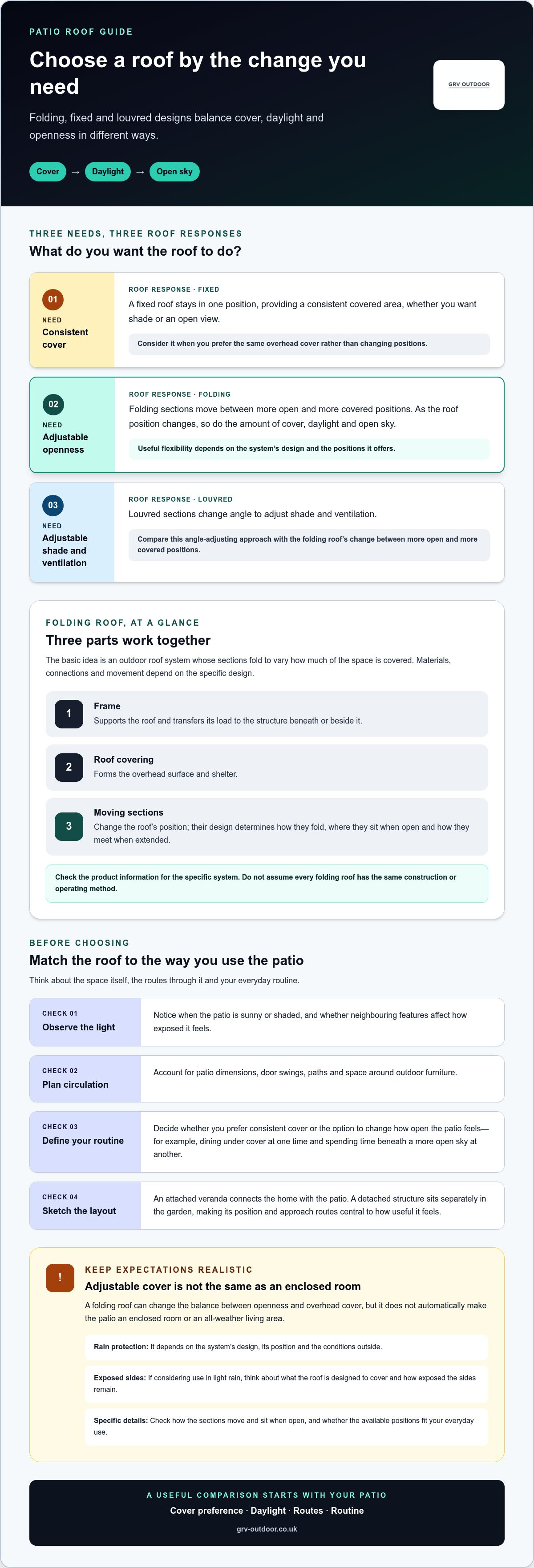
A fixed veranda roof stays in one position, providing a consistent covered area whether you want shade or an open view. A folding roof can change that balance: adjust its position and the amount of cover, daylight and open sky changes too. That can make the patio feel more sheltered at one time and more open at another. The exact movement and operating method depend on the system.
Which Outdoor Spaces Could Benefit from an Adjustable Roof?
An adjustable roof may suit a patio used for different activities, such as dining under cover and spending time beneath a more open sky. Before deciding, consider the patio’s dimensions, the position of doors and windows, and how people move between the house and garden. The roof should support those everyday patterns, not get in their way.
Attached and detached structures suit different layouts. An attached veranda sits alongside the home and can connect indoor rooms with the patio. A detached structure occupies a separate part of the garden, so its position and approach routes are central to how useful it feels. Sketch the footprint and routes before comparing systems.
- Observe the light: Note when the patio is sunny or shaded, and whether neighbouring features affect how exposed it feels.
- Plan circulation: Account for door swings, paths and space around outdoor furniture.
- Define your routine: Decide whether you prefer consistent cover or the option to change how open the patio feels.
These observations help you compare a fixed roof’s consistency with a folding roof’s adjustability. They also give you a practical basis for assessing specific systems against your space and routine.
How a Folding Roof Veranda Works: Parts, Movement and Shelter
A folding roof veranda combines a supporting structure with roof sections that can change position. In simple terms, it’s an outdoor roof system whose sections fold to vary how much of the space is covered. That describes the basic idea, not the construction or performance of every model.
The frame supports the roof and transfers its load to the structure beneath or beside it. The roof covering forms the overhead surface, while the moving sections allow you to alter the covered area. Their design determines how they fold, where they sit when open and how they meet when extended. Details vary by system, so check the product information for the specific design rather than assuming every folding roof works in the same way.
Verandas have a longer architectural role as transitional spaces between indoors and outdoors. The National Gallery of Art’s Historical and Architectural Context of Verandas explores this function and the history of veranda design. A folding roof adds another choice to that relationship: the overhead cover can change as you use the patio.
What Are the Main Parts of a Folding Roof System?
Think of the system in three parts: the frame that provides support, the roof covering that forms the shelter, and the moving sections that change the roof’s position. These parts need to work together, but their materials, connections and movement depend on the design. Check the details of the individual system rather than assuming every folding roof has the same structure or operating method.
How Does a Folding Roof Affect Light and Shelter?
When more of the roof is open, the patio has a more open aspect overhead and daylight can reach it differently. When more cover is in place, the roof provides a greater barrier overhead. The amount of shade or rain protection depends on the system’s design, its position and the conditions outside. There is no single performance description that applies to every configuration.
That distinction matters in a changeable UK climate. A folding roof lets you alter the balance between openness and overhead cover, but it is not a guarantee of protection in all weather or necessarily a roof for every season. If you plan to use the patio in light rain, consider what the roof is designed to cover and how exposed the sides remain. A roof alone does not enclose the space.
Look beyond the open and closed positions. Consider where the sections sit when moved, how the supporting structure relates to the house, and whether the available positions suit the patio’s everyday use. These details can help you judge whether the movement offers useful flexibility for your routine.
Once you’ve established what you want from the roof, explore GRV’s Verdeca Folding Roof and compare the system information with your priorities for the space.
Folding vs Fixed vs Louvred Veranda Roofs: Which Suits Your Patio?
Roof types manage cover, daylight and overhead openness in different ways. Folding sections move; fixed glass and polycarbonate roofs stay in place; louvred roofs adjust through angled sections. The right fit depends on how you want the patio to feel and how you plan to use it.
Use this comparison to narrow your options, not as a guarantee of performance. Actual light, shade and shelter vary with the product, its configuration and the conditions at the site.
| Roof format | Adjustability and openness | Light and shelter | May suit |
|---|---|---|---|
| Folding | Roof sections move between more open and more covered positions. | Light and overhead cover change with the roof position and design. | Patios used for both open-sky moments and covered activities. |
| Fixed glass | Remains in one position, with a consistently covered overhead area. | Allows daylight through the roof; the degree of shelter depends on the system. | Spaces where a permanent cover and a brighter overhead feel are priorities. |
| Polycarbonate | Fixed formats provide cover without an adjustable roof position. | Light transmission and shelter depend on the selected material and configuration. | Patios where a fixed roof format suits the intended use. |
| Louvred | Adjustable sections change angle to alter the roof’s openness. | Light and cover vary with louvre position and system design. | Those who want to vary the angle of overhead sections. |
Folding Roof or Fixed Glass Roof: What Is the Difference?
A folding roof offers a variable overhead position, while a fixed glass roof maintains consistent cover. If you value the option to open up the patio, compare folding formats. If you prefer a permanent covered area and daylight through the roof, fixed glass may better match your priorities. For adjoining glazing, read this outdoor glass sliding doors guide, and review glass veranda planning permission considerations as part of project planning.
Folding Roof or Louvred Roof: Which Offers More Control?
These designs adjust coverage in different ways. Folding sections move to create a more open or covered roof position; louvres change angle, altering the gaps and orientation overhead. Consider whether you want a more open sky, adjustable shade or a consistently covered feel. Neither format is automatically better. The experience depends on the product’s design and configuration.
Picture a typical afternoon on your patio. Would you rather move the roof sections to change how open the space feels, adjust louvres to vary their angle, or leave a fixed roof in place? Thinking through how you’d use the space can help narrow the options before you compare specific systems.
How to Choose a Folding Roof Veranda for Your Home
Start with how you want to use the patio, then consider its layout, your roof preferences and the project requirements. This order helps separate what you want from what the site and relevant UK rules may allow. A folding roof veranda should fit everyday movement around the home as well as your preferred balance of cover and openness.
- Set the intended use. Decide whether your priority is dining under cover, adjustable shade or the option to open up the space. Note which activities matter most and when you expect to use the patio.
- Map the layout. Measure the patio’s width and projection, then mark the area you want to use. Include furniture and enough room for people to move around it.
- Choose your roof preference. Consider how often you’d change the roof position, how much open sky matters and whether a fixed cover might better suit your routine.
- Review the project conditions. Consider how the structure would meet the house, what support is available and whether there are site constraints. Keep these design questions separate from your preference for a particular roof.
- Check relevant requirements. Establish which planning and building-regulations guidance applies to the project before finalising decisions.
What Should You Measure Before Choosing a Folding Roof?
Measure the patio’s width and projection, then note how much usable space will remain once furniture is in place. Mark the position and swing of doors, nearby windows, steps and access routes. Consider the route between the house and garden, too. These measurements give you a practical starting point, while the site and its relationship to the house inform the final design.
A simple sketch can help. Mark fixed features such as drainpipes, wall lights and changes in level, then note where people regularly walk or sit. Don’t measure only the roof footprint: consider how the covered area will work around entrances and outdoor furniture.
Do UK Veranda Projects Need Planning or Building Approval?
There isn’t one answer for every veranda. Planning permission and building regulations are separate considerations, and whether either applies depends on the project’s design and circumstances. Planning relates to whether development needs consent; building regulations concern applicable standards for building work. Addressing one does not automatically settle the other.
Use the relevant national guidance for the part of the UK where the property is located, and consult the local planning authority about project-specific planning considerations. Requirements can differ across the UK, and the structure’s design and setting matter. Keep approval questions distinct from choosing a roof format, and consider them alongside the wider project design using current official guidance.
Once your measurements and priorities are clear, explore GRV’s Verdeca Folding Roof as an option for adjustable coverage that you can compare with your patio layout.
Explore GRV’s Verdeca Folding Roof for a More Flexible Patio
Once you’ve clarified how you use your patio and what you want from its roof, you can compare systems with a clearer purpose. GRV sells the Verdeca Folding Roof for projects where an adjustable roof is under consideration. Explore its product information to see how it fits your priorities, rather than assuming a folding design will suit every patio.
GRV designs and manufactures custom outdoor structures for residential and commercial projects across the UK. Its range includes the Verdeca Folding Roof, glass-roof systems and polycarbonate-roof systems. Comparing these options after assessing your needs helps keep the decision grounded in your home and how you intend to use the space.
Is the Verdeca Folding Roof the Right Direction for Your Project?
A folding roof may suit a patio used for different activities if you value changing how open the overhead space feels. Picture the patio in two everyday situations: with the roof more open and with more cover overhead. Which qualities matter in each position? This comparison can help you decide whether adjustability is central to your plans or simply an attractive extra.
Consider the connection to your home, too. A patio beside frequently used doors may call for a different layout from a separate seating area further into the garden. The shape and usable area of the space, along with the way people move through it, should inform what you explore. Assess the project design alongside the product rather than assuming a system will suit every property.
The Verdeca Folding Roof is one option to compare with GRV’s glass-roof and polycarbonate-roof categories. Focus on your priorities: an adjustable roof position, the amount of openness you want and how the structure relates to your patio. That keeps the comparison centred on your intended use, rather than treating any roof type as a universal solution.
What to Do Before You Explore Folding Roof Options
Have a few practical details to hand before reviewing the range. A concise project brief makes it easier to assess whether a system’s format aligns with your plans.
- Measurements: Note the patio’s width, projection and usable area.
- Layout: Mark doors, windows, paths, furniture and the route between the home and garden.
- Use: Describe what you want to do beneath the roof and how open you’d like the patio to feel.
- Project questions: Record any site or approval considerations to address as the design develops.
These notes won’t decide the project on their own, but they give you a practical framework for comparing folding roof options. They also help separate product preferences from layout and approval questions, so you can consider each in turn.
Ready to explore adjustable cover for your patio? Browse GRV’s outdoor structure range and consider where the Verdeca Folding Roof fits with your plans.
Shape Your Patio Around the Way You Live
The right roof choice starts with a picture of daily life, not a specification sheet. Imagine the patio on a bright afternoon, during a family meal or in a quieter moment outdoors. What would you want to change overhead in each situation? Your answer can help you decide whether a folding roof veranda belongs in your plans.
Keep your patio measurements and priorities close at hand as you explore options. Think about how the structure should sit alongside the house, how people will move through the space and how you want the patio to feel with the roof open or covered. A clear brief helps you focus on systems that suit your intended use.
Use that brief as your starting point. Explore GRV’s outdoor living range to see how the Verdeca Folding Roof and other outdoor structures could inform your plans. Explore GRV’s outdoor living range and take the next step towards a patio that feels considered and practical.
Frequently Asked Questions
Is a folding roof veranda the same as a pergola?
Not necessarily. “Pergola” is a broad term for an outdoor garden structure, while “veranda” usually describes a covered area connected to a building. Some product names use both terms, so the label alone does not explain how the roof moves or how the structure relates to the house. When comparing a folding roof veranda, focus on whether it is designed as an attached structure and how its roof sections adjust, rather than relying on its name.
Can you use a folding roof veranda when it is raining?
Possibly, but don’t assume every system offers the same protection. Rain cover depends on the roof design, its position and the conditions, including wind that can drive rain into an open-sided space. Consider how you’d use the patio in light rain and whether furniture or belongings need separate protection. Follow the product guidance, and don’t treat a covered position as a guarantee of shelter in all weather.
Can a folding roof veranda be used throughout the year?
It may be used in different seasons, but a roof alone doesn’t make an outdoor space comfortable in every condition. A sheltered spot on a mild winter day is different from an enclosed, heated room. Consider exposure to wind, whether the sides remain open and how you expect to use the patio in colder months. If year-round use is a priority, decide whether an outdoor cover meets your needs or whether you want a more enclosed space.
Can you add glass sliding doors to a folding roof veranda?
Glass sliding doors can form part of some outdoor structures, but compatibility depends on the folding roof system. The roof design, supporting structure and space for door panels and tracks all matter. GRV offers Fiano Glass Sliding Doors. Consider the doors and roof as elements of one project design, including how an enclosure would affect access, ventilation and the way you use the patio.
Does a folding roof veranda need regular maintenance?
Plan for routine care, although the specific tasks depend on the system’s materials and design. Keep the roof and surrounding area clear of leaves and debris, clean surfaces in line with the product care guidance, and look for visible wear around moving sections and connections. Don’t apply lubricants or cleaning products unless the relevant instructions allow them. Regular attention helps you spot dirt or damage early.
Does a folding roof veranda always need planning permission in the UK?
No. Some veranda projects may fall under permitted development, but requirements depend on the property, location and design. For example, a platform more than 30cm above ground can affect planning requirements; this measurement concerns the platform, not the roof. Listed buildings, conservation areas and the structure’s position or coverage can also matter. Planning permission and building regulations are separate questions, so check current guidance and your local planning authority’s advice.