

The most enclosed garden structure isn’t always the best choice. The right outdoor room all year round UK homeowners can enjoy depends on what they want to do there and how much shelter they need from changing weather.
It’s understandable to wonder whether a veranda will provide enough cover or whether a garden room will feel too closed off. The roof, doors and side walls all affect shelter, daylight and the connection to the garden. Glass sliding doors or a louvred side wall can also change how open or enclosed the space feels.
This guide explores practical ways to use an outdoor room in every season, from summer dining to sheltered time outdoors on cooler or wetter days. Compare attached and detached structures, roof options and levels of enclosure to find a format that suits your activities. Plan for regular seasonal use, rather than expecting an outdoor structure to perform like an insulated indoor extension.
Key Takeaways
- Year-round use means making the space useful across seasons, not expecting indoor temperatures from an outdoor structure.
- Compare roof, side and door options to balance shelter, daylight, access and an open feel.
- Match the level of enclosure to the activity, whether you’re working, dining, socialising, enjoying hobbies or relaxing.
- Plan in order: define how you’ll use the space, consider its exposure, then choose shelter, access and flexible furnishings.
- Explore how GRV verandas, glass rooms and detached pods can create an outdoor room all year round UK homeowners can tailor to their garden and routine.
What does an outdoor room for year-round use in the UK really mean?
A year-round outdoor room is a space you can use regularly in different seasons, not a promise of indoor temperatures in every kind of weather. How often you use it depends on the shelter and enclosure, what you do there and your own comfort. A covered spot may be enough for a quick coffee or a meal outdoors; longer activities may call for more protection from the elements.
An outdoor room is a sheltered garden space designed for seasonal use; unlike an insulated extension, it doesn’t promise the same indoor conditions. The idea builds on the long-standing place of the Garden room in UK garden design. Modern formats range from an open veranda to a glass-enclosed room or a detached pod, each creating a different relationship between home and garden.
Start with the activity, then choose a format. A veranda can define an outdoor dining or seating area while keeping it open to the garden. A glass room feels more enclosed, while a detached pod creates a separate space away from the house. GRV’s range includes verandas, glass rooms and Grillo Pods, with components such as glass sliding doors and side walls to shape the level of openness. These formats aren’t interchangeable: enclosure, privacy and exposure vary.
How is a year-round outdoor room different from a summerhouse?
A summerhouse is often treated as a fair-weather retreat. An outdoor room can be planned for more regular seasonal use by choosing a roof, doors or side panels to suit the setting and activity. An open-sided structure may work for a sunny lunch; a more enclosed space may be better for reading or a hobby when conditions are less inviting. More enclosure doesn’t mean every structure will be equally warm or weatherproof.
Which UK seasons should your outdoor room work for?
In wetter periods, overhead shelter and thoughtful side protection can make the space more practical. On colder days, you may prefer shorter visits or a more enclosed setting. In brighter, warmer weather, ventilation and an open connection to the garden may matter more. Seasonal usability is about having options, not expecting comfort in every condition. Plan for the days you’re most likely to use the space, then choose a level of shelter that supports that routine.
How roof, sides and doors shape an outdoor room for every season
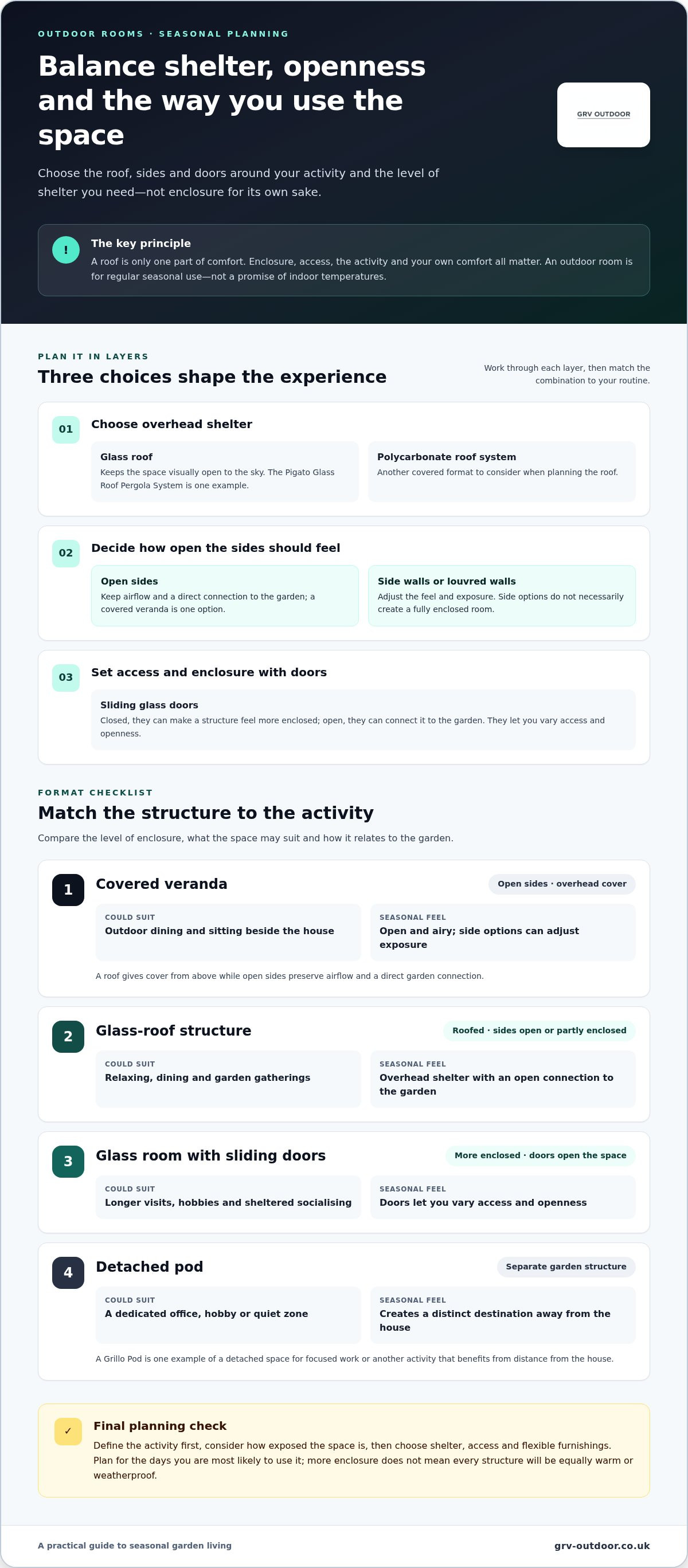
The roof provides the first layer of shelter, but it doesn’t determine how comfortable or flexible the whole space will feel. A glass roof, such as the Pigato Glass Roof Pergola System, keeps the space visually open to the sky; a polycarbonate roof system offers another covered format. Adding side walls or sliding doors changes how exposed the space feels, how people enter it and how open it remains to the garden.
Roof choice alone doesn’t define comfort; enclosure, access and the activity all matter. Use this comparison to narrow down the format that suits your plans.
| Format | Degree of enclosure | Suitable activities | Seasonal flexibility |
|---|---|---|---|
| Covered veranda | Open sides, with overhead cover | Outdoor dining, sitting beside the house | Open and airy; side options can adjust exposure |
| Glass-roof structure | Roofed, with open or partly enclosed sides | Relaxing, dining and garden gatherings | Balances shelter overhead with an open connection to the garden |
| Glass room with sliding doors | More enclosed, with doors to open the space | Longer visits, hobbies and sheltered socialising | Doors let you vary access and openness |
| Detached pod | Separate garden structure | A dedicated office, hobby or quiet zone | Creates a distinct destination away from the house |
When does an open or covered veranda make sense?
Choose a veranda when you want a defined place to dine or relax beside the house without closing off the garden. A roof provides cover from above, while open sides maintain airflow and a direct connection to the outdoors. Side options, including louvred walls, can change the feel and exposure, but don’t assume they create a fully enclosed room. Before choosing a structure, review the Planning Portal’s guidance on planning permission for outbuildings.
When might glass doors or a detached pod suit your plans?
Sliding glass doors can make a garden structure feel more enclosed when closed, then open it towards the garden when conditions and your plans suit. A detached pod, such as a Grillo Pod, creates a separate zone for focused work or another activity that benefits from distance from the house. For more on standalone structures, read this detached garden veranda design and buying guide. Explore GRV outdoor structures to compare formats for an outdoor room all year round UK homeowners can shape around their intended use.
Five outdoor room ideas for work, dining and relaxing all year
Start with a clear purpose. Match the amount of shelter to how long you’ll spend there, how much focus the activity needs and how exposed the space is. These five ideas show how an outdoor room all year round UK homeowners can use might work in daily life, without assuming every structure suits every season.
- Focused work: Use a detached pod as a separate garden office. Regular work calls for more enclosure and a practical setup for equipment than occasional laptop use on a summer afternoon.
- Everyday dining: Place a table beneath a covered roof to make outdoor meals possible beyond the sunniest days. Keep a clear route back into the house for carrying food and clearing up.
- Socialising: Create a gathering spot with enough room for seating and easy movement. A more enclosed arrangement with glass doors can suit get-togethers when you want a defined space between house and garden.
- Hobbies: Set aside a work surface or storage for activities such as painting, reading or crafts. Choose the level of enclosure based on how sensitive your materials are to the conditions and how often you’ll use them.
- Quiet relaxation: Make a sheltered corner for a chair, a small table and a book. Keep the furniture easy to move so the space can open up when the weather is brighter.
Everyday usability depends on details as well as the structure. Consider where outdoor furniture can stay, where you’ll store cushions or hobby equipment, and whether the route into the space remains convenient in wet weather. Regular work may also require lighting, power or heating, depending on the setup and your needs. Don’t assume a sheltered room will provide the same conditions as an indoor office.
Can an outdoor room work as a garden office or hobby space?
Yes, if its layout supports the activity. A Grillo Pod creates a distinct zone for focused work or hobbies, separate from household routines. For regular office use, prioritise a more enclosed arrangement than you might choose for occasional summer use, and plan for equipment, storage and access. Compare different formats in this guide to choosing UK outdoor living structures.
How can a sheltered space support dining and entertaining?
A covered area can make dining outside an option beyond the brightest summer days, while an outdoor kitchen can support food preparation and hosting. For a more protected gathering space, glass doors offer a way to adjust how open the room feels. Plan seating, serving space and the route back to the house before arranging the furniture.
How to plan an outdoor room that stays useful as seasons change
Plan around everyday use, not a structure you like in isolation. A clear sequence helps you balance shelter, daylight and garden access, so the space can adapt as your routine and the seasons change.
- Define the main activities. Decide whether the priority is focused work, dining, hobbies or relaxing. Note how often you expect to use the space and what each activity requires.
- Assess the setting. Look at the garden at different times of day. Notice where daylight falls, which sides feel most exposed and how nearby planting or buildings affect the outlook.
- Choose the shelter level. Match the roof, doors and side options to the exposure and planned use. A regular work area may need a different layout from a spot used for occasional outdoor meals.
- Plan access. Map the route from the house to the outdoor room and on to any seating or cooking area. Leave practical space to move furniture and carry items in and out.
- Furnish flexibly. Use movable seating and create simple zones that can be rearranged for work, entertaining or quieter moments.
How should you match the layout to your garden and activities?
Start with the tasks that matter most, then position the structure and furniture around them. Place a desk or hobby surface where it can be used without blocking the route through the space. For dining, leave room to move between the table, house and any outdoor cooking area. Glass sliding doors can help shape the transition between enclosed and open use. Explore this outdoor glass sliding doors buying guide when considering access and enclosure.
Also consider what you’ll see from inside the house and how daylight changes through the day. A bright outlook may suit a reading corner, while focused work may benefit from a layout that limits distractions. The right position depends on your garden and how you’ll use the room.
What seasonal adjustments make the space more usable?
Keep the layout adaptable. Choose furniture that can be moved or stored, and use furnishings suited to the conditions rather than leaving items exposed by default. Keep entrances and walkways clear, especially when the space serves more than one purpose.
If you’re considering heating, choose an option suited to the structure and intended use; don’t assume an outdoor room will perform like an insulated extension. Thoughtful planning can make an outdoor room all year round UK households use more often, although comfort still depends on the design, conditions and personal needs. Explore GRV’s outdoor-room options to find a format that fits your plans.
Choosing a GRV outdoor-room format for year-round garden living
The right format depends on how open you want the space to feel, what you plan to do there and how it fits into your garden. GRV’s range includes verandas, glass-room formats and detached Grillo Pods, with roof systems, glass sliding doors and side options to shape the balance between shelter and openness. These are outdoor structures, not substitutes for an insulated indoor extension.
Which GRV structure fits an open, sheltered or enclosed outdoor room?
If you want covered outdoor living with an open connection to the garden, a veranda such as the Ribolla Detached Veranda is a format to consider. It can suit seating or dining where overhead shelter matters, while the sides remain more open than in a glass room.
For a more enclosed connection to the garden, glass-room formats such as Pinela Glass or Pinela Deluxe Plus may be a better starting point. Glass sliding doors, including the Fiano Glass Sliding Doors, help shape access and openness. Side options also influence how enclosed the space feels. A Grillo Pod sits separately in the garden, making it a useful format when you want a dedicated area away from the house, such as a work or hobby zone.
What should you compare before settling on a design?
Look beyond appearance. Compare the activities you want to support, the roof style, side options, access and the space available in your garden. GRV’s roof systems include glass and polycarbonate options; the right fit depends on the balance you want between shelter, light and an open garden outlook. Consider how doors affect the route in and out, and whether the structure should connect directly to the home or create a separate destination.
Then prioritise your seasonal routine. If you’ll mainly use the space for open-air dining, a veranda may suit your plans. If you want a more enclosed setting for regular hobbies or work, consider a glass-room format or detached pod. Plan furniture placement and access before deciding, so the structure supports daily use rather than simply filling a space.
An outdoor room all year round UK homeowners can enjoy starts with realistic expectations and a format chosen for its purpose. Roofs, doors and sides help tailor the space, but they don’t guarantee indoor temperatures or comfort in every condition.
Explore GRV outdoor living structures and compare formats for your garden and plans.
Shape an outdoor room around the way you live
A garden space can stay useful through more of the year when its format suits your activities and the conditions you’re prepared for. Start with what matters most, whether that’s a sheltered place to dine, a separate area for focused work or a flexible place to relax. Then balance roof cover, enclosure and access to the garden.
The right outdoor room all year round UK homeowners choose doesn’t need to feel closed off. GRV’s range includes glass rooms and verandas, multiple roof systems, glass doors and louvred side walls, giving you options to shape openness and shelter. Modular formats also include detached veranda structures and Grillo Pods for a separate garden-use area. Each offers a different way to connect outdoor living with everyday routines, without replacing the conditions of an insulated indoor extension.
Ready to compare formats for your garden and plans? Explore GRV outdoor living structures and take the next step towards a space that works for you across the seasons.
Frequently Asked Questions
Can you use an outdoor room all year round in the UK?
Yes, an outdoor room can be used regularly across the seasons, but that doesn’t mean it will feel like an indoor room in every condition. Use depends on the structure’s roof, sides and doors, the activity and your own comfort. A covered veranda may suit occasional sheltered meals, while a more enclosed room or detached pod may better support regular work or hobbies. Plan for the conditions you’re comfortable using it in.
What type of outdoor room is best for year-round use?
The best option is the one that suits your activities and preferred balance of shelter and openness. A veranda offers a covered, open-air setting; a glass-room format gives a more enclosed connection to the garden; and a detached Grillo Pod creates a separate zone. Compare roof systems, side options and doors against your routine. No format should be assumed to provide the warmth or temperature control of an insulated extension.
Is a glass room warm enough to use in winter?
A glass room isn’t automatically warm enough for comfortable winter use. Its temperature will depend on its design, level of enclosure, conditions and any suitable heating you choose. GRV glass-room formats and sliding glass doors can create a more enclosed outdoor space, but they shouldn’t be treated as an insulated indoor extension. Consider how long you plan to spend there, what you’ll be doing and what level of comfort you need.
Can a veranda be used in winter?
A veranda can still be useful in winter for brief visits or sheltered outdoor moments, depending on the conditions and your comfort. Its roof provides overhead cover, while an open-sided layout maintains a connection to the garden. Side options may change the exposure and feel, but don’t necessarily create a fully enclosed room. For longer activities in colder weather, consider whether a more enclosed format better suits your routine.
How can I make an outdoor room more comfortable in colder weather?
Start by choosing a level of enclosure that suits the activity, then arrange seating away from the most exposed parts of the space where practical. Add furnishings suited to outdoor conditions and store blankets or cushions when they’re not in use. If you’re considering heating, choose an option appropriate for the structure and intended use. Comfort will still vary with the weather, the room’s design and your personal needs.
What is the difference between a garden room and a veranda?
A garden room usually describes a more enclosed space, while a veranda is typically a roofed area with open sides. Glass doors or side panels can increase enclosure in some formats, while a veranda keeps a more direct, open connection to the garden. The terms can cover different designs, so compare the actual roof, sides and access rather than relying on the label alone. Neither format automatically performs like an insulated extension.
Can a detached garden pod be used for different activities throughout the year?
Yes. A detached Grillo Pod can serve as a separate area for work, hobbies or quiet relaxation, and its use can change with your needs. Keep furniture flexible and organise storage so the space can shift between activities. For regular use across the seasons, consider the enclosure, access and conditions you’re comfortable with. A pod offers a distinct garden zone, but shouldn’t be assumed to provide indoor-equivalent temperatures.