

The most attractive veranda floor isn’t always the right one for the space. PVC decking for veranda use may look like a straightforward choice, but labels such as PVC, uPVC and composite can make the options difficult to compare.
Look beyond appearance. A veranda’s exposure to rain and sunlight, how you plan to use it and how the surface feels underfoot all matter when choosing flooring. Consider the care required and how the finish may look over time, too.
This guide explains the differences between PVC, uPVC and composite decking, then compares them with other veranda flooring options. You’ll learn what to consider about your veranda’s setting, comfort, care and overall design, as well as what to assess before measuring and ordering. GRV offers PVC decking alongside verandas and outdoor structures, so you can plan the floor as part of the wider outdoor space. By the end, you’ll have a clearer basis for deciding whether PVC is a practical fit for your veranda.
Key Takeaways
- Start with how you’ll use the veranda, whether for dining, relaxing or everyday access.
- Understand how PVC, uPVC and composite differ before comparing flooring options.
- When assessing PVC decking for veranda use, compare the surface finish, board dimensions and product guidance.
- Plan measurements, thresholds, drainage direction and edges before choosing a finish.
- Compare the floor with your veranda’s overall design for a more considered outdoor space.
Is PVC Decking Right for a Veranda? Start With How You Will Use the Space
A veranda floor needs to suit more than the view from the house. Consider how you’ll use the space, how exposed it is to the weather and how the flooring will meet the doorway. PVC decking for a veranda is a floor covering made from polyvinyl chloride boards, selected and installed as part of an outdoor space rather than a complete veranda design.
Choosing a board material doesn’t determine the veranda’s roof, layout or supporting structure. It’s one part of planning the space. Appearance, upkeep, underfoot feel and structural suitability all deserve attention before you settle on a floor.
What does PVC or uPVC decking mean?
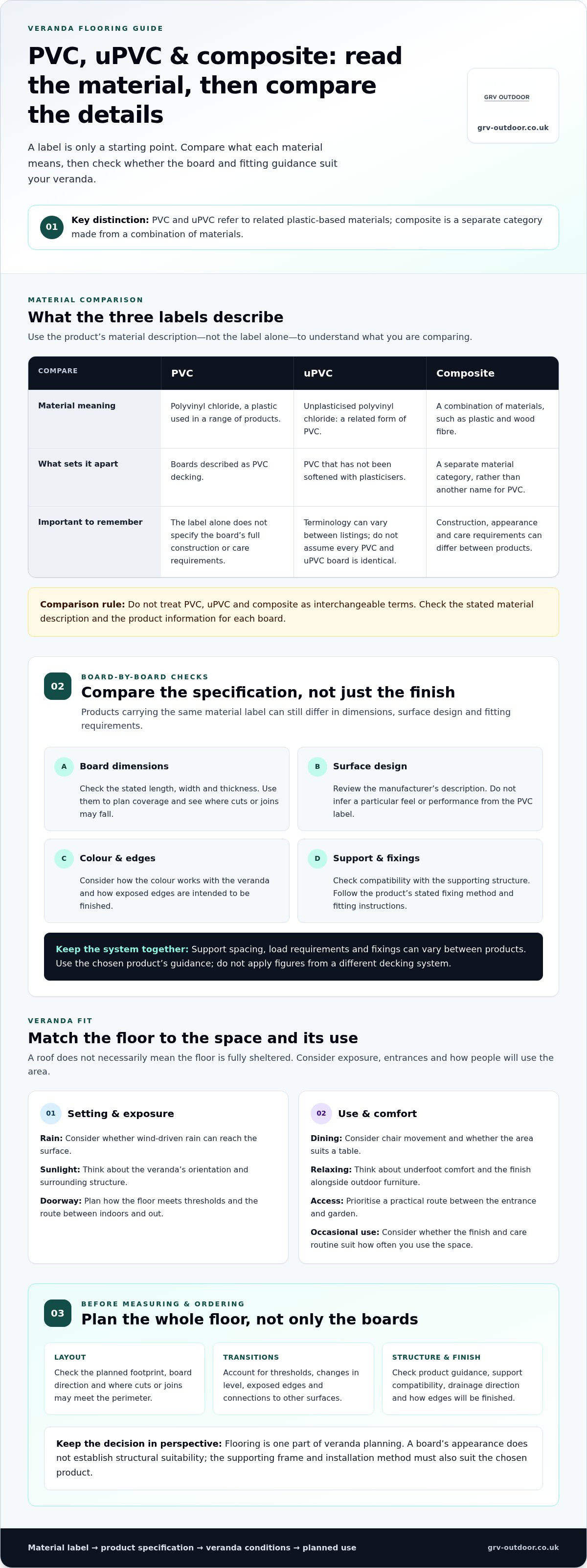
PVC stands for polyvinyl chloride, a plastic used in a range of products. The Polyvinyl chloride (PVC) overview explains the material and its uses. uPVC means unplasticised polyvinyl chloride, a related form that hasn’t been softened with plasticisers. Terminology can vary between decking listings, so don’t assume PVC and uPVC always describe identical board formulations.
Neither term means the same as composite. Composite decking combines plastic with wood fibre or other materials, while PVC decking refers to boards described as PVC. Use each product’s material description when comparing options. A label alone won’t tell you every detail of a board’s construction, surface or care requirements.
What makes a veranda different from a garden deck?
A veranda may have a roof, but that doesn’t make the floor fully sheltered. Its orientation and surrounding structure affect how much sunlight reaches the boards and whether wind-driven rain can reach the surface. Consider the conditions around your home, not just the presence of a roof.
Entrances also shape the decision. The floor has to work with door thresholds and the route between indoors and out. A change in level, an exposed edge or a transition to another surface can affect how the space looks and functions. These details are separate from the choice of colour or board style.
Start with the intended use:
- Dining: Consider how chairs will move across the surface and whether the available area suits a table.
- Relaxing: Think about comfort underfoot and how the finish will look alongside your outdoor furniture.
- Access: Prioritise a practical route between the entrance and the rest of the garden.
- Occasional use: Decide whether the proposed finish and care routine make sense for a space used less often.
Separate visual preference from structural suitability. A board may complement the veranda’s design, but the supporting frame and installation method must also suit the chosen product. Review the product guidance and consider how the floor will meet the structure before ordering. This helps you choose for the space you’re planning to use, not for appearance alone.
How PVC Veranda Decking Is Made and What Its Construction Means
The name on the label is a starting point, not a full specification. Boards sold as PVC decking can differ in dimensions, surface design, edge profile and fitting requirements. Those differences affect how the floor looks, how it meets borders or doorways, and whether it suits the veranda’s supporting structure. Read the product information before comparing options on appearance alone.
A board’s material label alone can’t tell you whether it’s suitable for your veranda. Construction details and installation guidance matter too. This is especially relevant when planning PVC decking for veranda use, where the boards need to work as part of a complete floor and support system.
PVC, uPVC and composite decking: how the terms differ
PVC and uPVC both describe plastic-based materials. PVC is polyvinyl chloride, while uPVC refers to an unplasticised form of it. Composite is a separate category, typically made from a combination of materials such as plastic and wood fibre. These labels don’t establish that products share the same construction, appearance or care requirements. Compare the stated material description for each board rather than treating the terms as interchangeable.
Which product details should buyers compare?
Look beyond the material category. Compare the listed dimensions and surface design, then consider whether the colour and edge treatment suit the floor layout. Board dimensions affect how the decking fits the planned footprint and where cuts or joins may fall. Surface texture and colour shape the finished look, but suitability depends on the space and the product’s stated details.
- Board dimensions: Check the stated length, width and thickness to plan coverage and understand how boards may meet the perimeter.
- Surface design: Review the finish as described by the manufacturer, rather than assuming a particular feel or performance from the PVC label.
- Colour and edges: Consider how the colour works with the veranda and how exposed edges are intended to be finished.
- Support compatibility: Check that the product is specified for the supporting structure in your project.
- Fixings and fitting: Follow the stated fixing method and installation instructions. Don’t assume one system suits every board.
Pay particular attention to instructions for support spacing and load. Requirements can vary between products, so don’t apply figures from a different decking system. The same applies to fixings: the board, support structure and specified fixings need to work together as described in the product guidance. Gather these details before finalising the layout or ordering materials.
GRV offers PVC decking alongside veranda and outdoor structure options, so you can consider the floor as part of the wider design. Explore GRV PVC decking as you compare the board information with your veranda plans.
PVC vs Composite vs Timber: Compare Veranda Decking on the Right Criteria
Decking categories can sound similar, but their materials are not interchangeable. PVC is plastic-based; composite typically combines plastic with wood fibre; timber is wood. These descriptions are useful starting points, not guarantees about how a particular board looks, feels or performs. Compare the product’s stated construction and guidance, then match them to your veranda and priorities.
How do PVC and composite decking compare?
PVC and composite differ in what they’re made from, but neither label tells you the whole story. Boards in either category can vary in finish, dimensions and installation requirements. Don’t assume every plastic-based board has the same construction, care needs or behaviour underfoot. Review the individual product details, especially claims about weathering, colour stability, cleaning and slip resistance, and look for information specific to that product.
| Material | Appearance | Upkeep | Potential project fit |
|---|---|---|---|
| PVC | Manufactured board; colours and surface designs depend on the product. | Follow the product’s cleaning and care instructions. Don’t infer a routine from the PVC label alone. | Consider it if you want a plastic-based board and its stated specifications suit the veranda. |
| Composite | Typically made from plastic and wood fibre; the finish varies between products. | Care guidance depends on the board and its surface. Check the manufacturer’s instructions. | Compare its specific construction and fitting requirements with the support structure and setting. |
| Timber | Natural wood character, with appearance affected by the timber and finish selected. | Consider the care routine stated for the timber and any applied finish. | May suit a design that prioritises the look of natural wood and accepts its care requirements. |
Use the table to narrow your priorities, not to declare a universal winner. If a particular colour or surface is central to your design, compare product imagery or samples rather than relying on broad material descriptions. If easy care matters most, look for clear cleaning guidance for the specific product. General claims about maintenance or weather performance shouldn’t be applied to every board in a category.
When might timber decking suit a veranda better?
Timber is a distinct choice for buyers drawn to the natural variation of wood. Its appearance depends on the timber and finish, and its care needs depend on the product and how it’s treated. Decide whether that character suits you and whether the care routine in the product guidance fits your plans. Avoid judging timber against PVC or composite on lifespan, cost or environmental impact without reliable, comparable evidence.
Whichever material you prefer, suitability depends on more than the surface. Check the board’s specifications, installation method and compatibility with the veranda’s support structure. Then consider the setting, including how exposed the floor is and how it connects to entrances and edges. This gives you a sound basis for choosing PVC decking for veranda use, composite or timber according to the product and project, rather than assumptions about a material label.
Plan PVC Decking for a Veranda: Measurements, Subframe and Finish
Good planning connects the floor to the veranda as a whole. Before choosing boards, map the usable area, note how the floor meets the house and nearby surfaces, and review the product’s fitting guidance. This helps you identify practical details early, from doorway clearances to visible edges, instead of making decisions after the layout is set.
What should you measure before choosing veranda decking?
Measure the floor area and record any features that interrupt it. Posts, walls, doorways and changes in level can affect the layout and the amount of board material required. Note where the decking meets the house and any adjacent path or patio, too. These junctions shape the transition between surfaces and influence how the finished floor looks.
How should the decking relate to the veranda structure?
The roof and site conditions affect how exposed the floor is to sunlight and wind-driven rain. Consider that exposure when reviewing a board’s finish and care instructions. If you’re weighing up shelter as well as flooring, GRV’s weatherproof veranda guide offers broader context, while its folding roof veranda guide can help you think about the structure as part of the plan.
Use this sequence to organise your decisions:
- Map the footprint. Measure the usable floor area and mark posts, walls, entrances and level changes. Record measurements clearly so you can compare the layout with the board dimensions.
- Plan the doorway transition. Note the threshold height and how the decking will meet the entrance. Consider the route from indoors and whether the planned floor level and edge treatment suit that junction.
- Check neighbouring surfaces. Record where the veranda floor meets a patio, path or other surface. Think through how those edges and transitions will look and function.
- Consider board direction and drainage. Sketch possible board orientations and how they affect the visual lines of the space. Review how water is intended to drain around the veranda, without assuming a slope or installation detail that isn’t in the product guidance.
- Review the support structure and instructions. Check that the existing or proposed subframe suits the chosen boards. Follow the manufacturer’s requirements for support, fixings and installation rather than applying guidance from another product.
These checks help bring the floor and veranda into one considered design. If you’re still choosing boards, explore GRV PVC decking alongside your measurements and structure plans. Match the product’s stated requirements to the project before ordering, and keep its installation guidance available as you finalise the layout.
Explore GRV PVC Decking for a Coordinated Veranda Design
GRV offers PVC decking as a flooring option to consider alongside a veranda or other outdoor structure. The boards are one part of planning a space that feels connected to your home, so choose them for the project rather than treating them as a standard add-on. Start with how you’ll use the veranda, the space you’ve measured and the look you want to create.
What should you consider when choosing GRV PVC decking?
Start with the product information. Compare the board details with the footprint, layout and intended use of your veranda. Then review the installation guidance, including any stated requirements for the supporting structure and fitting method. Suitability depends on how the product and project work together.
Base decisions on the details for the specific product. Don’t assume a particular colour, board size, surface finish, cleaning routine or performance from the words “PVC decking” alone. If a feature matters to your plans, use its stated specification as your reference before settling on the design.
How does decking fit into the wider veranda design?
Look at the floor as one element of the finished space. Its colour and visual lines can influence how the veranda relates to the house, roof style and adjoining patio or garden. Consider the structure, intended use and floor together, even when selecting each element separately. A dining area, for example, may call for a different layout emphasis from a clear route between the house and garden.
Keep the roof decision distinct from the flooring choice. Roof materials affect the character and shelter of the structure, while the floor contributes its own look and practical requirements. GRV’s veranda roof material comparison can help you explore that separate decision without assuming the roof and decking are supplied as a combined system.
Before making a final choice, bring together your measurements, intended use and preferred appearance. Check that the product information and installation guidance align with your plans, then consider how the flooring will sit alongside the wider outdoor area. This gives you a clearer basis for deciding whether PVC decking for veranda use suits your design.
GRV’s range includes PVC decking, verandas and outdoor structures for planning a coordinated outdoor space. Explore GRV outdoor living products and take the next step by comparing the options with your plans.
Shape Your Veranda Around the Way You Live
A well-planned veranda can make the step between home and garden feel more intentional. The floor is part of that experience, so choose PVC decking for veranda use with the atmosphere you want to create, whether that means a calm place to unwind or a welcoming setting for time with family.
GRV designs and manufactures verandas and outdoor structures, with PVC decking available as a flooring option for your plans. Its outdoor living range serves customers across the UK, offering a starting point for bringing structure and flooring choices into the same design conversation without assuming they’re a single package.
Take your ideas from the page to a more defined plan. Explore GRV PVC decking and outdoor living products and picture how your veranda could connect with the space around it. Browse the range and start planning a veranda that makes practical use of your outdoor space.
Frequently Asked Questions
Is PVC decking suitable for a veranda?
It can be suitable if the particular boards are specified for the conditions and support structure of your veranda. For example, a floor beside an open edge may face different exposure from one enclosed by walls. Compare the product guidance with the site, intended use and proposed frame before choosing. PVC decking for veranda projects isn’t a one-size-fits-all solution, so judge the product details, not the material name alone.
What is the difference between PVC and composite decking?
PVC decking is made from polyvinyl chloride, while composite decking combines materials, commonly plastic and wood fibre. This difference is a useful starting point, but doesn’t establish how a specific board will look or feel. If you’re comparing samples, check their published descriptions and care instructions individually. Boards from different categories, or even from the same category, may have distinct surface designs and installation requirements.
Is uPVC decking the same as PVC decking?
Not exactly. Both terms refer to polyvinyl chloride-based materials, but uPVC means unplasticised PVC, a related formulation. Product listings may use these labels differently, so read the material description rather than assuming “PVC” and “uPVC” guarantee identical composition. If the exact formulation matters for your project, rely on the product documentation. Don’t use either term as a substitute for checking the board’s stated construction.
Can PVC decking be installed over an existing veranda subframe?
Possibly, but an existing frame isn’t automatically compatible with new boards. Its condition, layout and fixing points need to meet the chosen product’s installation instructions. A frame designed for another type of decking may not suit the board dimensions or fixing method. Compare the existing support structure with the manufacturer’s requirements before planning an overlay, and address any damage or movement before proceeding.
How do you clean PVC decking on a veranda?
Follow the care instructions supplied for the specific decking, as cleaning methods can vary by product and surface finish. Check what the manufacturer permits for routine cleaning and which products or tools to avoid. Don’t assume abrasive tools, strong chemicals or pressure washing are suitable. If food or drink spills occur during outdoor dining, use the cleaning method stated in the product guidance rather than experimenting.
Does PVC decking become slippery when wet?
It depends on the product’s surface and the conditions underfoot, so don’t assume PVC decking is either slippery or slip-resistant as a category. Look for product-specific slip-resistance information, especially if the veranda is exposed to rain or regularly used as an entrance route. Leaves, dirt and standing water may also affect footing. Follow the manufacturer’s cleaning advice and assess the surface in the context of its intended use.
Can PVC decking be used with any veranda design?
No single decking product should be assumed to suit every veranda. Board dimensions, edge details and fixing requirements need to align with the structure, while the colour and surface design should work with the wider scheme. A floor planned alongside a glass roof, for instance, may call for a different visual balance from one beside an enclosed outdoor room. Check the product guidance against the design before committing.